View article from shazli.com
From albwhsn.net
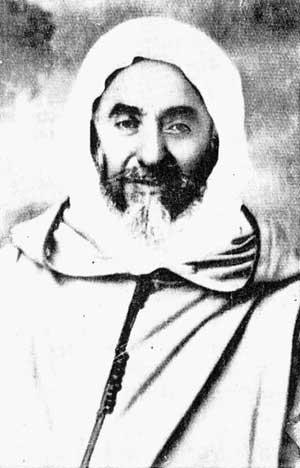
ترجمة سيدي الشيخ محمد الهاشمي التلمساني رحمه الله تعالى
ولادته رحمه الله تعالى:
ولد سماحة الأستاذ المرشد الكبير سيدي محمد بن الهاشمي قدس الله روحه من أبوين صالحين، كلاهما من آل بيت النبوة، يرجع نسبهما إِلى الحسن بن علي رضي الله عنهما، يوم السبت 22 شوال 1298هـ في مدينة سبدة التابعة لمدينة تلمسان، وهي من أشهر المدن الجزائرية. وكان والده من علمائها وقاضياً فيها، فلما توفي ترك أولاداً صغاراً، والشيخ أكبرهم سناً.
بقي الشيخ مدة من الزمن ملازماً للعلماء، قد انتظم في سلكهم جاداً في الازدياد من العلم، ثم هاجر مع شيخه محمد بن يَلِّس إِلى بلاد الشام فاراً من ظلم الاستعمار الإِفرنسي، الذي منع الشعب الجزائري من حضور حلقات العلماء وتوجيههم. وكانت هجرتهما في 20 رمضان سنة 1329هـ عن طريق طنجة ومرسيليا، متوجهين إِلى بلاد الشام. فمكثا في دمشق أياماً قلائل، وعمِلَتْ الحكومة التركية آنذاك على تفريق جميع المغاربة الجزائريين، وكان نصيبه رحمه الله تعالى أن ذهب إِلى تركيا وأقام في أضنة، وبقي شيخه ابن يَلِّس في دمشق. وعاد بعد سنتين إِلى دمشق ؛ فالتقى بشيخه ابن يَلِّس وَصَحبه ولازَمه.
وفي بلاد الشام تابع أخذ العلم عن أكابر علمائها. ومن أشهرهم المحدِّث الكبير بدر الدين الحَسَني، والشيخ أمين سويد، والشيخ جعفر الكتاني، والشيخ نجيب كيوان، والشيخ توفيق الأيوبي، والشيخ محمود العطار وأخذ عنه علم أُصول الفقه، والشيخ محمد بن يوسف المعروف بالكافي وأخذ عنه الفقه المالكي، وقد أجازه أشياخه بالعلوم العقلية والنقلية.
أما من ناحية التصوف فقد أذن له شيخه محمدبن يَلِّس بالورد العام لما رأى من تفوقه على تلامذته، من حيث العلمُ والمعرفةُ والنصحُ لهم وخدمتُهم. ولما قدم المرشد الكبير أحمد بن مصطفى العلوي من الجزائر لأداء فريضة الحج ؛ نزل في دمشق بعد وفاة سيدي محمد بن يَلِّس سنة 1350هـ، وأذن له بالورد الخاص [تلقين الاسم الأعظم] والإِرشاد العام.
أخلاقه وسيرته:
كان رحمه الله تعالى متخلقاً بأخلاق النبي (صلى الله عليه وسلم)، متابعاً له في جميع أقواله وأحواله وأخلاقه وأفعاله، فقد نال الوراثة الكاملة عن الرسول (صلى الله عليه وسلم).
وكان متواضعاً حتى اشتهر بذلك ولم يسبقه أحد من رجال عصره في تواضعه.
وكان يعامل الناس كما يحب أن يعاملوه. دخل عليه رجل فقبَّل يد الشيخ رحمه الله تعالى؛ وأراد الشيخ أن يقبل يده، فامتنع الرجل عن ذلك وقال: أستغفرُ الله يا سيدي أنا لست أهلاً لذلك، أنا أَقبل رجلكم. فقال الشيخ رحمه الله تعالى: إِذا قَبَّلت رِجْلَنَا فنحن نقبل رجلَكم.
وكان يحب أن يخدم إِخوانه بنفسه، فيأتي الزائر، ويأتي التلميذ
فيبيت عنده فيقدِّم له الطعام، ويحمل له الفراش مع ضعف جسمه. وكم جئناه في منتصف الليل، وطرقنا بابه، فيفتح الباب وهو بثيابه التي يقابل بها الناس، كأنه جندي مستعد. فما رأيناه في ثوب نوم أبداً.
وكان حليماً لا يغضب إِلا لله. حَدَث أن جاءه رجل من دمشق إِلى بيته وأخذ يتهجم عليه، ويتهكم به، ويتكلم بكلمات يقشعر لها جلد المسلم ؛ ولكن الشيخ رضي الله عنه لم يزد على قوله له: الله يجزيك الخير، إِنك تُبين عيوبنا، وسوف نترك ذلك ونتحلى بالأخلاق الفاضلة. وما أن طال المقام بالرجل إِلا وأقبل على الشيخ، يقبل قدميه ويديه، ويطلب منه المعذرة.
وكان كريماً لا يرد سائلاً. وكم رأينا أشخاصاً يأتون إِليه فيعطيهم ويكرمهم، ولاسيما في مواسم الخير ؛ حيث يأتي الناس لبيته، وترى موائد الطعام يأتيها الناس أفواجاً أفواجاً يأكلون منها، ولا تزال ابتسامته في وجهه، وقد بلغ من كرمه أنه بنى داره التي في حي المهاجرين بدمشق قسمين: قسم لأهله، وقسم لتلاميذه ومريديه.
وكان من صفاته رضي الله عنه واسع الصدر وتحمل المشقة والتوجيه، وشدة الصبر مع بشاشة الوجه ؛ حتى إِني استغربت مرة صبره فقال لي: يا سيدي! مشربُنَا هذا جمالي. وكان يأتي إِليه الرجل العاصي فلا يرى إِلا البشاشة من وجهه وسعة الصدر، وكم تاب على يديه عصاة منحرفون، فانقلبوا بفضل صحبته مؤمنين عارفين بالله تعالى.
حَدَث أنه كان سائراً في الطريق بعد انتهاء الدرس، فمر به سكران ؛ فما كان من الشيخ رحمه الله تعالى إِلا أن أزال الغبار عن وجهه، ودعا له ونصحه، وفي اليوم الثاني كان ذلك السكران أول رجل يحضر درس الشيخ، وتاب بعد ذلك وحسنتْ توبته.
وكان رحمه الله تعالى يهتم بأحوال المسلمين ويتألم لما يصيبهم، وكان يحضر جمعية العلماء التي تقام في الجامع الأموي، يبحث في أمور المسلمين ويحذِّر من تفرقتهم، وقد طبع رسالة تبين سبب التفرقة وضررها، وفائدة الاجتماع على الله والاعتصام بحبل الله سماها: القول الفصل القويم في بيان المراد من وصية الحكيم.
وكان رحمه الله تعالى يكره الاستعمار بكل أساليبه، ويبحث في توجيهه عن مدى صلة الحوادث مع الاستعمار وكيفية الخلاص من ذلك. ولما نَدبتْ الحكومة الشعب إِلى التدرُّب على الرماية، ونظَّمت المقاومة الشعبية، سارع الشيخ لتسجيل اسمه بالمقاومة الشعبية، فكان يتدرب على أنواع الأسلحة مع ضعف جسمه ونحوله وكبر سنه. وبهذا ضرب للشعب المثل الأعلى لقوة الإِيمان والعقيدة والجهاد في سبيل الله، وذكَّرنا بِمَنْ قبله من المرشدين الكُمَّل الذين جاهدوا الاستعمار وحاربوه ؛ أمثال عمر المختار والسنوسي وعبد القادر الجزائري. وما المجاهدون الذين قاموا في المغرب، لإِخراج الاستعمار وأذنابهم إِلا الصوفية.
وكان رحمه الله تعالى حسن السيرة والمعاملة، مما جعل الناس، يُقبلون عليه ويأخذون عنه التصوف الحقيقي، حتى قيل: لم يشتهر الهاشمي بعلمه مع كونه عالماً، ولم يشتهر بكراماته مع أن له كرامات كثيرة، ولكنه اشتهر بأخلاقه، وتواضعه، ومعرفته بالله تعالى.
وكان رحمه الله تعالى إِذا حضرْتَ مجلسه، شعرت كأنك في روضة من رياض الجنة ؛ لأن مجلسه ليس فيه ما يشوبه من المكدرات والمنكرات. فكان رحمه الله تعالى يتحاشى أن يُذكر في حضرته رجل من المسلمين وينقص. ولا يحب أن يذكر في مجلسه الفساق وغيرهم، ويقول: عند ذكر الصالحين تنزل الرحمة.
وبقي رحمه الله تعالى دائباً في جهاده مستقيماً في توجيهه للمسلمين وإِخراجهم مما وقعوا فيه من الضلال والزيغ. فقد كانت حلقاته العلمية متوالية من الصباح حتى المساء ؛ ولاسيما علم التوحيد الذي هو من أُصول الدين، فيبيِّنَ العقائد الفاسدة والإِلحادية، مع بيان عقيدة أهل السنة والجماعة، والرجوع إِلى الله تعالى؛ والتعلق به دون سواه
نشاطه في الدعوة والإِرشاد:
كان بيته قبلة للعلماء والمتعلمين والزوار، لا يضجر من مقابلتهم، ويقيم ـ مع ضعف جسمه ـ حلقات منظمة دورية للعلم والذكر في المساجد والبيوت، ويطوف في مساجد دمشق، يجمع الناس على العلم وذكر الله والصلاة على رسول الله (صلى الله عليه وسلم). ولم يزل مثابراً على همته ونشاطه ودعوته حتى أيامه الأخيرة.
تتلْمذَ عليه نخبةٌ طيبةٌ صالحة من العلماء وطلاب العلم، ومن مختلف طبقات الأمة يهتدون بإِرشاداته، ويغترفون من علومه، ويقتبسون من إِيمانه ومعارفه الذوقية، ويرجعون إِليه في أُمورهم.
وقد أذن للمستفيدين منهم بالدعوة والإِرشاد، وبذا انتشرت هذه الطاقة الروحية الكبرى في دمشق وحلب، وفي مختلف المدن السورية والبلدان الإِسلامية.
مؤلفاته:
1ـ مفتاح الجنة شرح عقيدة أهل السنة.
2ـ الرسالة الموسومة بعقيدة أهل السنة مع نظْمها.
3ـ البحث الجامع والبرق اللامع والغيث الهامع فيما يتعلق بالصنعة والصانع.
4ـ الرسالة الموسومة بسبيل السعادة في معنى كلمتي الشهادة مع نظمها.
5ـ الدرة البهية.
6ـ الحل السديد لما استشكله المريد من جواز الأخذ عن مرشدين.
7ـ القول الفصل القويم في بيان المراد من وصية الحكيم.
8ـ شرح شطرنج العارفين للشيخ محي الدين بن عربي.
9ـ الأجوبة العشرة.
10ـ شرح نظم عقيدة أهل السنة.
وغير ذلك من الرسائل.
وقد أخذ التصوف عن سيدي الهاشمي رحمه الله تعالى كثيرٌ من العلماء وغيرهم لا يعلم عددهم إِلا الله.
وهكذا قضى الشيخ الهاشمي حياته في جهاد وتعليم، يربي النفوس، ويزكي القلوب الراغبة في التعرف على مولاها، لا يعتريه ملل ولا كسل. واستقامته على شريعة رسول الله (صلى الله عليه وسلم) قولاً وعملاً وحالاً، ووصيتُه في آخر حياته: عليكم بالكتاب والسنة، تشهد له بكمال وراثته.
وهكذا رحل الشيخ الكبير إِلى رضوان الله تعالى وقربه يوم الثلاثاء 12 من رجب 1381هـ الموافق 19 كانون الأول 1961م، وصُلي عليه بالجامع الأموي، ثم شيعتْه دمشق تحمله على الأكف إِلى مقبرة الدحداح، حيث وُورِي مثواه، وهو معروف ومُزَار. ولئن وارى القبرُ جسدَه الطاهر الكريم، فما وارى علمه وفضله ومعارفه وما أسدى للناس من معروف وإِحسان، فلِمثْل هذا فليعملِ العاملون. وهذا من بعض سيرته الكريمة، وما قدمناه غيضٌ من فيضٍ ونقطة من بحر، وإِلا فسيرة العارفين منطوية في تلامذتهم، ومن أين للإِنسان أن يحيط بما تكنه صدورُهم وأسرارهم ؟
وفي مثله قال القائل:
إِنْ تــســــــلْ أيـــنقــبــورُالـعــظــمــا فــعـــلـى الأفــواه أو في الأنــفـــس
وبمثل هذه الشخصيات الحية نقتدي وبمثلهم نتشبَّه.
فـتـشــبَّــهـُواإِن لم تـكـونـوا مـثلَهــم إِنَّ التـشـــبُّــهَ بالـكــرامِ فــــلاحُ
وقد قيل:
مــوتُ الــتــقــي حــيــاةٌ لا انــقــطـاعَ لهــا قدْ مات قومٌ وهمْ في الناس أحياءُ
ــــــــــــــــــــــــــــــــــــــــــــــــــ
Search text:
Al-Sayyid al-Sheikh
Muhammad al-Hashimi al-Hasani
(b. 1298 – d. 1381 H.) = (1880–1961)
by bmk
Sufi Master, scholar of Fiqh and `Aqida, mjadhid. Unique in his humbleness, He was famous for his character and his ma`rifa of Allah, and he was not famous for his knowledge nor for his karamat, although he had plenty of both. His character was that of the Prophet, in speech, hal, character and deeds. He treated others as he would like them to treat him. His guest tables were famous, and his smile always resplendent. He never became angry except for the sake of Allah. He spread the Shadhili tariqa in Sham.
His lineage
His life
His jihad
His teachers and ijazat
His work
His character
His students
His writings
His passing
His silsila
Relation to the Yaqoubi family
References
More...
His lineage
He is Muhammad b. Ahmad b. Muhammad b. `Abd al-Rahman b. Abi Jam`a al-Hashimi al-Jaza'iri al-Sahili thumma al-Dimashqi al-Ash`ari al-Maliki. His lineage - on both parents' side - goes back to Sayyiduna al-Hasan ibn Abi Talib, may Allah be pleased with the two of them.
top >>
His life
top >>
He was born by righteous parents on Saturday the 22 of Shawwal 1298 in the city of Sabta next to Tlimsan in Algeria. His father, who was a qadi of Tlimsan, passed away when he was a boy, leaving behind several children, of which Muhammad was the oldest. He studied under scholars in Algeria.
In 1329, he migrated together with his family, and his sheikh, Sheikh Muhammad ibn Yallis, and the latter's son, Sheikh Ahmad, escaping french opression in Algeria, whch prevented `ulema from having their halaqas. Sheikh Muhammad al-Hashimi was at that time about 31 years old. By way of Tanja and Marn, they headed towards Sham. He recorded everything in detail in his diary:
"Al hamduli Allah. On Thursday the 20th of Ramadan 1329, corresponding to the 14 of September (Aylub) of 1911, we left Tlimsan emmigrating. We stayed in Tanja during the whole month of Shawal, waiting for al-Babur. At this time, the news reached us of Italy's occupation of Tarabulis al-Gharb (Tripoli), may Allah thwart her efforts, and give Islam victory over her. Peace. The slave of his Master Muhammad ibn al-Hashimi."
On the 5th of December the same year he recorded: "We reached Marsin, when 27 days had passed of (the month of) Dhul Hijja, and it so happened that we were upheld for a long time on our travel. We remained there for two months and some twenty days. Peace. The slave of his Master Muhammad ibn al-Hashimi."
At that time, Damascus was under the rule of the ottoman governer Jamal Pasha. The Turkish government spread out Algerian refugees to different places in the Ottoman empire. When the Hashimi family arrived at Sham, Sheikh Muhammad al-Hashimi was taken to Adnah in Turkey, while his sheikh, Sheikh Muhammad bin Yallis, remained in Damascus. After two years, he was allowed to return to Damascus and reunite with his sheikh.
During the first world war, the Syrian populations suffered great hardship, particularly in the provisioning of food. Harvests were poor, the army requisitioned some of the crop, and Britain and France blockaded the Syrian coast to prevent imports. During this time, both the mother and the brother of Sheikh Muhammad al-Hashimi passed away. In Dhul Qa`da 1333 / Aug 1915 his mother Amatu Allah Khayra bint al-Shaykh Abi Zian passed away, and was buried in the graveyard at Bab Saghir in Damascus, next to the two wifes of the Prophet (sall Allah`alehi wa sallam). His brother, Sheikh Muhammad the younger, passed away in 1334 / 1916 and was buried in the graveyard of Bab Saghir near the grave of Ibn Umm Maktum al-A`ma, one of the companions of the Prophet (sallAllah `aleihi wa sallam).
top >>
His jihad
top >>
At the end of the world war, the ottoman power over Syria collapsed, and King Faysal, son of Husayn (the Sharif if Makka) seized power over Syria. In March 1920 he declared himself King of Syria. His kingdom lasted only for a few months, after whcih the french invaded Syria. People - and at their tëte the `ulema - rose in arms to defend the country against the french. They trained themseleves using the arms of the former Ottoman government.
Sheikh Muhammad al-Hashimi strongly disliked the french colonization. Despite of his age and his fragile physique, he joined the ranks of the popular uprising, training himself in martial arts and the use rifles. He fought alongside with many other `ulema of Damascus. amongst them one of his sheikhs, Sheikh al-Sharif al-Yaqoubi, who commanded a divison of 500 people. In July 1920, a battle was fought in the villiage of Maysaloon outside Damascus. The mujahidun were easily defeated because their weapons were old and inefficient, and many of them were sentenced to death and had to leave the country.
top >>
His teachers and ijazat
top >>
In Damascus, Sheikh Muhammad al-Hashimi attended the classes of Abd al-Qadir al-Dukali in Jami`al-Nakhla in Hayy al-Suayqa, and read many books with him, e.g. al-Sanusiyya with the aunthor's commentary on it, and the book Umm al-Barahin, and Sheikh al-Dukali gave him ijaza and gave him his book before passing. He also studied the books of ajza' (hadith) from various shuyukh in Damascus, among them al-Muhaddith Sheikh Badr al-Din al-Hasani; Imam Muhammad ibn Ja¨far al-Kettani al-Hasani, the great marokkan scholar and hadith master who resided in Damascus for almost ten years after the war (1336 –1345); Sheikh Amin al-Suayid, Sheikh Najib Kîwan, Sheikh Tawfiq al-Ayyubi, Sheikh Mahmud al-`Itar from him he took Usul al-Fiqh, and Sheikh Muhammad ibn Yusuf known as al-Kafi, from which he took Maliki fiqh. They gave him ijaza in all the logically derived and traditionally transmitted (`aqli wa naqli ) sciences.
His Sheikh in tasswuf and suluk was Sheikh Muhammad ibn Yallis, who gave him idhn for the Shadhili wird amm, and made him his khalifa after his son Ahmad, however he passed away in 1346 without giving him special ijaza for taking murids through the Shadhili path. When the great murshid Sheikh Ahmad ibn Mustafa al-`Alawi passed by Damascus on his way to hajj year in 1351, he gave him idhn for al-wird al-khass (al-ism al-mufrad) and for irshad.
top >>
His work
top >>
For more than thirty-five years, Sheikh Muhammad al-Hashimi was teaching in the Umayad mosque and other mosques of Damascus such as al-Nuriyya and al-Shamiyya. He establsihed organized study circles in private homes and in mosques, and he used to go round the mosques of Damascus to gather people for learning and dhikr. This he continued to do until his last days. He was tireless in directing Muslims to leave the wrong way. His classes were on Maliki fiqh, `Aqida, tasawwuf and tafsir al-Quran, and his circles of `ilm went on from morning to eve.
He was always concerned about the state of the Muslims, and it pained him when they suffered misfortunes. He used to gather the `ulema in the Umawi mosque to discuss the issues of the Muslims and warn against those who disunite them, He wrote a risala explaining the reasons of disunion and the harm of it and the usefulness of uniting for Allah and to cling to the rope of Allah. he called it "Al-Qaul al-fasil fe bayan al-murad min wasiyyati al-hakim."
His circles were like meadows of Paradise. He did not like that any shortcoming of any Muslim to be mentioned in his circels, nor did he want sinners to be mentioned. He used to say: "When mentioning the righteous, Mercy descends."
top >>
His character
top >>
He was a phenomenon in his character, which was most distingusished in humilty and gentleness. If someone asked him a question, he would say: You know better, it's from your knowledge. If he wanted to correct someone, he would say: "Sidi, what do you think, maybe this is better." He never made any claims, disliked ceremonies for him. He had many miracles, but he did not like people mentiong them. He never sat on a chair, but always on the floor. When guest came, he would seat them in his guest room, and them go to sort and shine thier shoes. He never allowed anyone to kiss his hand – even when elderly, he would always be the firts to kiss other people's hand. He stood for every person.
He built his home in Hayy al-Muhajirin on Mount Qasiun in two sections: one for his family an antother for his guests and murids. (Of Mount Qasiun it is said: It beats the youth, but the old people beat it.) His home was always full of guests. and he never got tired of serving them. Many slept over with him, and, with his fragile body, he served the brothers himself bringing them food and mattresses to sleep on. He never turned down a request or refused anyone help. People would come to him at midnight, and he would open the door, dressed the way he always used to received guests. One of his sudents said: "He was like soldier, always prepared. We never saw him wearing a night gown." [2]
He was magnanimous and forbearing, never got annoyed with anyone, and he carried every burden with patience and a joyous face. Once a man came to his home in Damascus and began to attack him and ridicule him, saying words that would make the skin of any Muslim contract. However the Sheikh said nothing to him except: "May Allah reward you with khayr, indeed you are exposing our faults, we will abandone those (faults) and improve our charater." At the end of the day, the man approached the Sheikh, kissed his hands and his feet and asked him for forgiveness.
His humbleness attracted people, and they learned from him, and made him famous and raised him in honor. Many a deviated sinner repented at his hands and became righteous believers, and knowers of Allah. It is reported that once a drunkard crossed his way, unkempt and dusty, and Sheikh Muhammad al.Hashimi wiped the dust from his face, spoke kindly to him, gave him advice and did du'a for him. On the next day, the drunkard repented and was the first to appear in his class,
top >>
His students
top >>
He was the humblest and gentlest of all sheikhs. Two students got this from him:
1. Sheikh Ahmad al-Shami – Hanbali mufti of Dumas
2. Sheikh Shukri al-Lahafi (at the time of writing still alive) – he is an embodyment of Sheikh Muhammad al-Hashimi
He had many murids, and he gave those of them whom he found deserving idhn for da`wa and irshad. In this way he contributed to the spreading of the tasawwuf and `ilm throughout Damascus, Aleppo and other places in Sham. Among the students he qualifed for irshad were Sheikh `Abd al-Rahman al-Shaghouri and Sheikh `Abd al-Qadir `Isa. Among his top students of his were Sheikh Ibrahim al-Yaqoubi, Sheikh Najib al-Ahraf, Sheikh Sanid al-Hamzawi, Sheikh Sa'id al-Kurdi (who lived in Jordan) and his son Isma`il. At the time of writing, many of his students are still alive.
His writings
top >>
Amongst his writings are:
- Al rislala al-mawsuma bi `aqida Ahl al-Sunna – a concise matn, also in a rhymed version
- Miftah al-Janna – Commentary on `Aqida Ahl al-Sunna
- Al-risalatu al-mawsuma bi sabil al-sa`ada fi ma`na kalimatay al-shahada – "The Way to Happiness through Shahada")
- Al-Qaul al-fasil fi bayan al-murad min wasiyyati al-hakim – about the unity of the Muslim umma
- Sharh Shatjanj al-`Arifin – a commentary on "Chess of the gnostics" of al-Sheikh Muhiy al-Din Ibn `Arabi (printed in Damascus 1357 / rendering in English)
- Al-hall al-sadid fima istashkalahu al-murid min jawab al-akhdh `an murshidayn – "Proving that a murid is allowed to take tariqa from two Masters at the same time"
top >>
His passing
top >>
He passed away in Tuesday the 12th of Rajab 1381, and the funeral prayer was held in the Umawi mosque. He is buried in the graveyard of Dahdah (to the northern side of the Umawi mosque). His grave is well known and visited by many.
His silsila
top >>
Sheikh Muhammad al-Hashimi took the Shadhili tariqa from
Sheikh Muhammad b. Yallis lal-Tlimsani (d. 1346 in Damascus), and from Sheikh Ahmad b. Mustafa al-`Alawi; who both took it from
Sheikh Muhammad b. al-Habib al-Buzidi, from
Sheikh Muhammad b. Qudur al-Wakili, from
Sheikh Abu Yusra al-Muhaji and Sheikh Muhammmad b. `Abd al-Qadir al-Basha, who both took it from
Sheikh al-`Arabi b. Ahmad al-Darqawi
Relation to the Yaqoubi family
top >>
Sheikh al-Sharif al-Yaqoubi was fifteen years older than Sheikh Muhammad al-Hashimi, and one of his teachers, They fought together in the battle of Maysaloon.
Sheikh Isma'il al-Yaqoubi ((he brother of Sheikh al-Sharif) was a close friend of Sheikh Muhammad al-Hashimi's. For five years they shared the same house, and their children grew up together and they are milk siblings. The house had two floors, one for the Hashimi family and one for the Yaqoubi family.
Sheikh Muhammad al-Hashimi was one of the major sheikhs of Sheikh Ibrahim al-Yaqoubi. Sheikh Ibrahim studied with him from the age of 5, and began memorzing his poems from age 6 or 7. He used to accompany him and his sons to the mosque, Among the books he studied with him are: the Makkan Revelations of Sheikh Muhy al-Din Ibn al-`Arabi, books of Imam al-Sha`rani, and books on `Aqida and Maliki fiqh. He was one of his top students, and he continued studying with him until his passing, Sheikh Muhammad al-Hashimi gave him general ijaza in everything logically derived and transmitted, including ijaza to transmit the Shadhili Path. The ijaza is signed the 24th of Shawal 1379.
top >>
top>>
References
[1] Tarikh`Ulema Dimashq 14th century, Vol 2 p. 747 ff. which is in turn based on an interview with Sheikh Ibrahim al-Yaqoubi, and on [2]
[2] Sheikh Muhammad `Isa: "Haqa'iq `an al-tasawwuf"
[3] Notes from lectures given by Sheikh Muhammad al-Yaqoubi. in particular: Lecture series on Love of the Scholars, given in New York, NY, November 2002
[4] Articles on modern history of the Middle East
More:
Bio in arabic (exernal link)
English tranlsation: (pdf)
© Damas Cultural Society
Last modified 2007-08-27