Bio: Sh. `Ali al-Sanhaji | الشيخ علي الصنهاجي
Sh. 'Ali b. Ahmad al-Dawwar al-Sanhaji
الشيخ علي بن أحمد الدوار الصنهاجيb. in Sanhaj – d.947 H. in Fas
qaddasa Allah sirrahu
﷽
He passed it on to Sayyidi Sh. ʿAbd Ar-Raḥmān the Attracted (Al-Majdhūb)
English
The Shaykh, Majdhūb and Knower of Allah,
Sidi ʿAlī b. Aḥmad ad-Dawwār al-Ṣanhājī
(d. 947 AH)
From Muhammad ibn Qasim al-Kuhin: Tabaqat al-Shadhiliyya
Taken originally from Shaykh al-Kattani’s Salwat al-Anfas
Translated by Khalid Williams
He is the righteous shaykh, the majdhūb wayfarer, the possessor of a mighty state and immense spiritual support, immersed in the ocean of ḥaqīqah, a full moon high in the firmament of the ṭarīqah, the malāmatī, Abul-Ḥasan Sidi ʿAlī b. Aḥmad b. ʿAlī b. Aḥmad b. ʿAbd ar-Raḥmān al-Ṣanhājī and then al-Fāsī. He was known as ad-Dawwār [the Circler], some say because of how he would go around generously sharing his secrets and spiritual states and giving them out on account of the slightest thing a person did, whether a murīd or otherwise. Others say it was because he would often walk around the land and the marketplaces crying, “Allah, Allah!” The author of Mumtiʿ al-Asmā’ said, “This is the most likely reason for the name; and some say he disliked to be called it.”
He was born, may Allah have mercy on him, in the large area of Ṣanhājah known as Ṣanhājat al-Ḥajr , from where his ancestors hailed, some of whom were also awliyā´ such as his great-great-great-grandfather [ʿAbd ar-Raḥmān]. He left the region in his youth and then later settled in Fes, where he remained for the rest of his life.
His biographical entry in ad-Dawḥah reads:
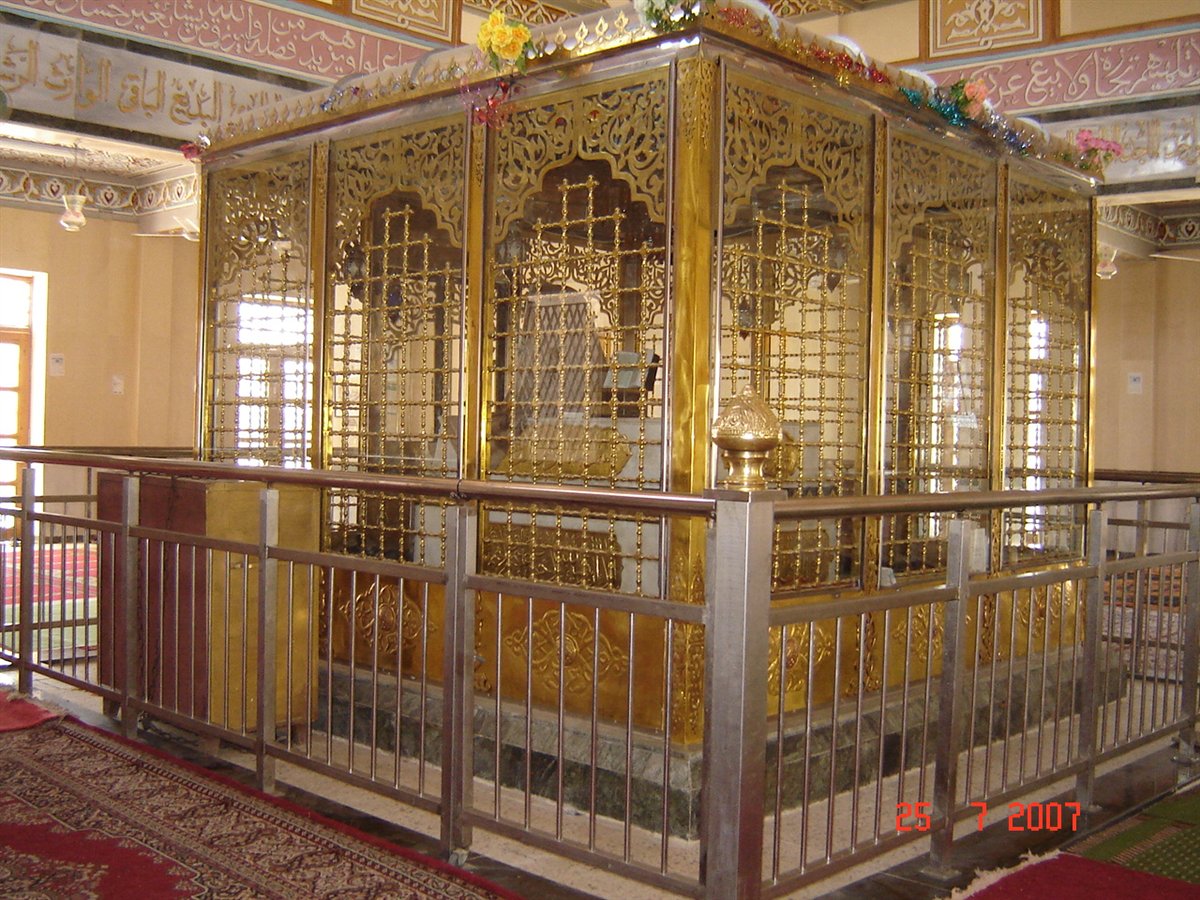
The renowned walī Shaykh Abū al-Ḥasan ʿAlī al-Ṣanhājī , known as ad-Dawwār , may Allah have mercy on him, was one of Allah’s righteous servants. The people of Fes were totally certain of his wilāyah. He was a jester and a majdhūb who followed the way of the Malāmatīyyah, and was overcome by states of jadhb at all times. He did not have a family or a fixed abode. He would relate things about the unseen and divulge many things from the people he encountered. He paid no attention to either praise or condemnation. He would enter the houses of the Marinid royals, and the women and children would come out to greet him and kiss his hands and feet, but he would pay no head to any They would give him luxurious gifts and precious treasures, and the Sultan would dress him in the finest clothes, and then when he left he would give all of it away, and would brush past the shops of the olive-oil merchants so that the sleeves of his fine garments were stained with oil and fat. He was always walking around crying out Allah’s Name, and as far as anyone knew he had no home. The people of Fes held him in high regard because of the countless miracles they witnessed at his hands. When he died, crowds of people attended his funeral and divided the wood of his bier, his prayer-mat and his clothing among themselves. He died last year of the fifth decade (of the 10th century), and was buried outside the Bāb al-Futūḥ gate. Everyone attended his funeral, including the Sultan and the jurists. May Allah have mercy on him.
Among his miracles, may Allah be pleased with him, was that he once passed by a house and placed his hand under the lintel of the door and began to cry out, “Everyone get out of the house!” Once they were all out and no one was left inside, he removed his hand, and the wall collapsed. Everyone was safe.
Another was that he entered a house unexpectedly without asking for permission to enter. The lady of the house was doing her laundry and had the clothes she was wearing rolled up, and she castigated him for coming in while she was in such a state. But at the very moment he came in, a child fell from the roof of the house and landed in his arms. He set the child down safe and sound and then said to the woman, “That is why I came in.” Then he quickly went on his way.
Another was that one day he was sitting by the door of the Qarawiyyīn mosque eating cucumbers while the people inside were praying. A man passed by him on his way into the mosque to join the prayer and thought to himself, “The people are praying, while Sidi ʿAlī is eating cucumbers instead of praying with them!” Then the man went in, and as he prayed his mind turned to a donkey he planned to buy from the Thursday market later that day; it was the Thursday dawn prayer. When he went out, Sidi ʿAlī called to him, “O so-and-so, better a cucumber-breakfast than a donkey-prayer!”
He, may Allah be pleased with him, composed a commentary on the meanings and secrets of the letters of the alphabet. The author of the Mumtiʿ said that he could not find it, while the author of the Rawḍah did quote it and also attributed the following lines of poetry to him:
Death annihilated those who came before,
And death will annihilate those who remain.
Death unites all, no matter their wealth;
It makes the rich and the poor the same.
O you who has been wicked in the past,
Be good in the time you have left!
Physical bounds did not restrain him, nor could any door or wall detain him. He was seen several times at the Kaʿbah, may Allah ennoble it. He was the master of his time, and had the upper hand over the other witnesses of the unseen, as can be seen from the famous story of his meeting with Sidi ʿAbd ar-Raḥmān al-Majdhūb at the door of the Qarawiyyīn by the candle-sellers. He approached him, took hold of him, shook him and then pushed him, whereupon he suddenly found himself by the water-tower in the Fes river, having been instantly transported there. Shaykh al-Majdhūb then saw Sidi ʿAlī pick him up with one finger by his belly and say to the folk of Allah who were gathered round, “Whoever loves me, be generous to this man!”
Al-Ibtihāj relates that some of the things Sidi ʿAlī said indicate that he was one of the abdāl, and Shaykh al-Mudriʿ included him in his poem about the aqṭāb:
Another was the eminent majdhūb and quṭb,
ʿAli ad-Dawwār, a truly beloved one,
A shaykh of eminent renowned shaykhs,
A guiding lamp for the folk of secrets and gnosis.
He studied, may Allah have mercy on him, under the knower of Allah, righteous shaykh and malāmatī majdhūb, Abū an-Nūr Sidi Ibrāhīm b. ʿAlī Āfḥām (or Āfhām) al- Zarhūnī, who is buried on Mount Zarhūn, and was his spiritual heir according to what is stated in al-Maqṣid and elsewhere, because it was he who manifested his power of jadhb and immersion in the divine Oneness, and this was not manifested in anyone else; indeed, it is not known that anyone else but him ever studied under Sidi Ibrāhīm.
عربي
Burial Place
Googlemaps link