Mediatype: Media post type
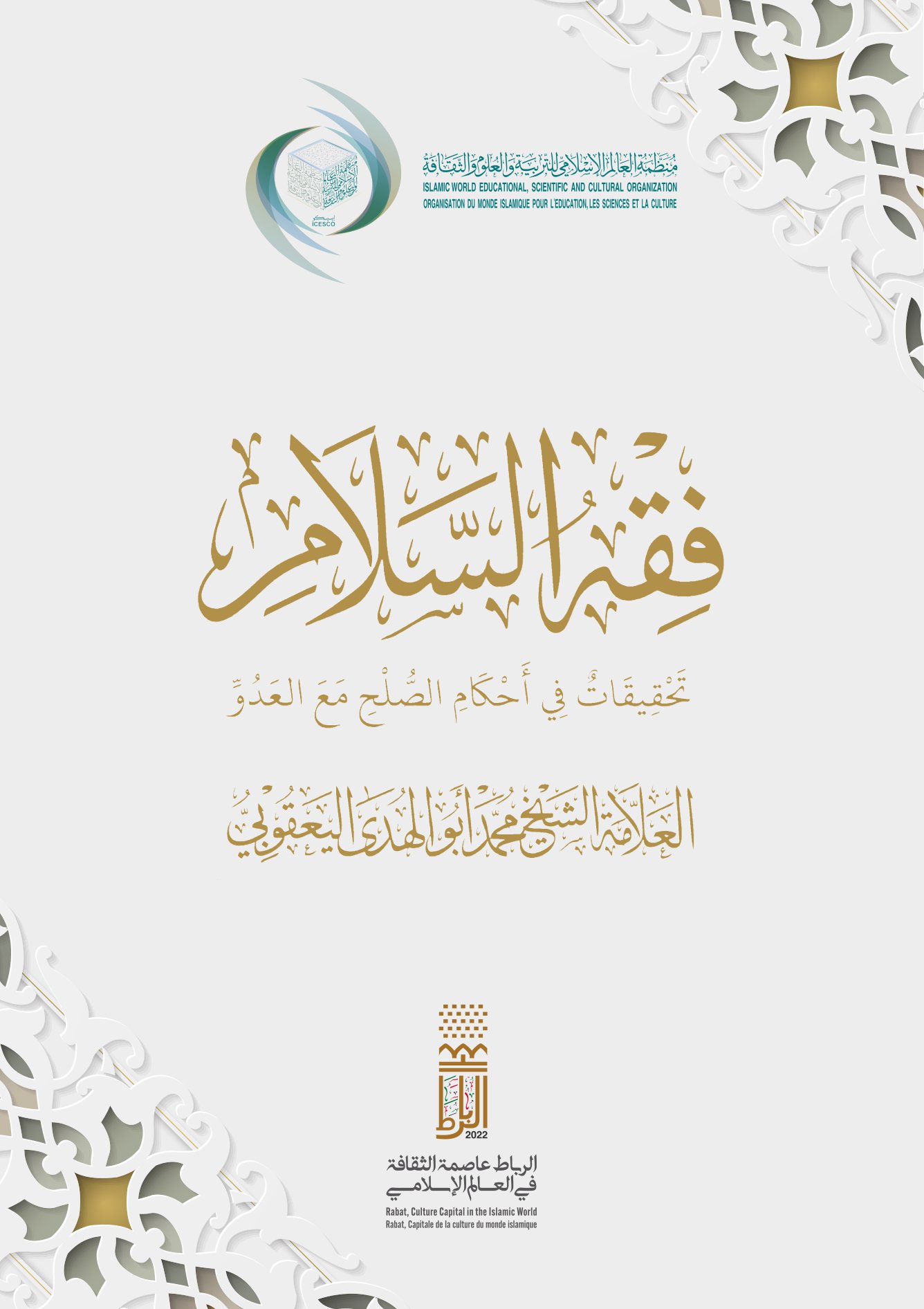
Book | Yaqoubi: Fiqh al-Salam – فقه السلام للشيخ محمد اليعقوبي

The Rulings of Truce
By His Eminence Shaykh Muhammad al-Yaqoubi ⇒فقه السلام تحقيقات في أحكام الصلح مع العدو - تأليف العلامة الشيخ محمد أبو الهدى اليعقوبي
 Tab links: Info
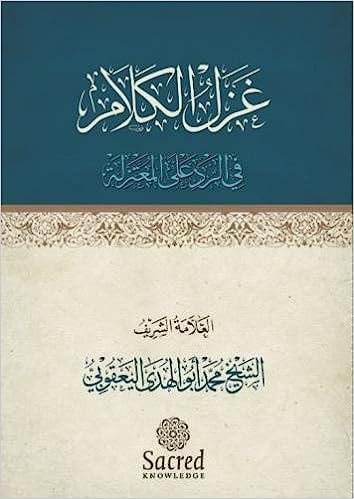
Book | Yaqoubi: Ghazal al-Kalam – غزل الكلام للشيخ محمد اليعقوبي
Celebrating Love and Theology
Refutation of the Mu'tazilitesBy His Eminence Shaykh Muhammad al-Yaqoubi ⇒
غزل الكلام في الرد على المعتزلة للعلامة الشيخ محمد اليعقوبي
 Tab links: Info
Book | Yaqoubi: Husn al-fahm – حسن الفهم لمسألة القضاء بالعلم للشيخ محمد اليعقوبي
Understanding Court Procedures
According to Magistrates' knowledgeBy His Eminence Shaykh Muhammad al-Yaqoubi ⇒
حسن الفهم لمسألة القضاء بالعلم للعلامة الشيخ محمد أبي الهدى اليعقوبي
Book | Yaqoubi: Kunuz al-Dua | كنوز الدعاء
Treasures of Du'a
Ramadan 1447 / 2026Compiled by HIs Eminence Shaykh Muhammad al-Yaqoubi ⇒
كنوز الدعاء - جمعها الشيخ محمد أبو الهدى اليعقوبي
Book | Yaqoubi: Madkhal ila Sahih al-Bukhari – المدخل إلى صحيح البخاري للشيخ محمد أبي الهدى اليعقوبي
Introduction to Sahih al-Bukhari
Seeking Knowledge - The Methodology & The EtiquetteBy His Eminence Shaykh Muhammad al-Yaqoubi ⇒
المدخل إلى صحيح البخاري للعلامة الشيخ محمد أبي الهدى اليعقوبي
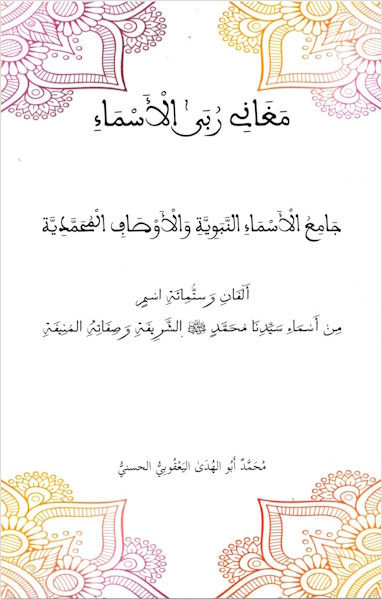
Book | Yaqoubi: Maghani Ruba’ al-Asma – مغاني ربى الأسماء النبوية
A Compendium of the Noble Names of Prophet Muhammad ﷺ
A Compendium of 2500 Names of the Propeht Muhammad ﷺCompiled for the first time by His Eminence Shaykh Muhammad al-Yaqoubi ⇒
مغاني ربى الأسماء النبوية للعلامة الشيخ محمد اليعقوبي

Book | Yaqoubi: Naht al-Ilm – نحت العلم للشيخ محمد اليعقوبي
Naht al-Ilm - نحت العلم
Seeking Knowledge: Methodology and EtiquetteBy His Eminence Shaykh Muhammad al-Yaqoubi ⇒
نحت العلم - مقدمات وقواعد في أصول طلب العلم وآدابه
للعلامة الشيخ محمد أبي الهدى اليعقوبي
 Tab links: Cover
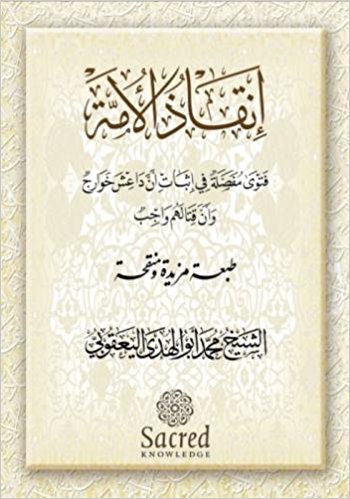
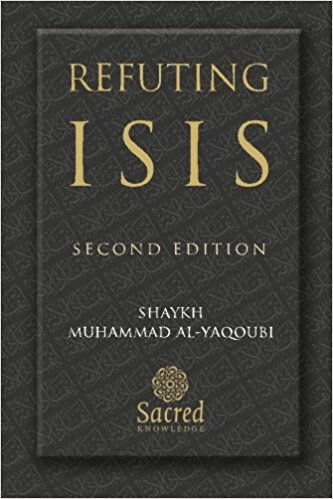
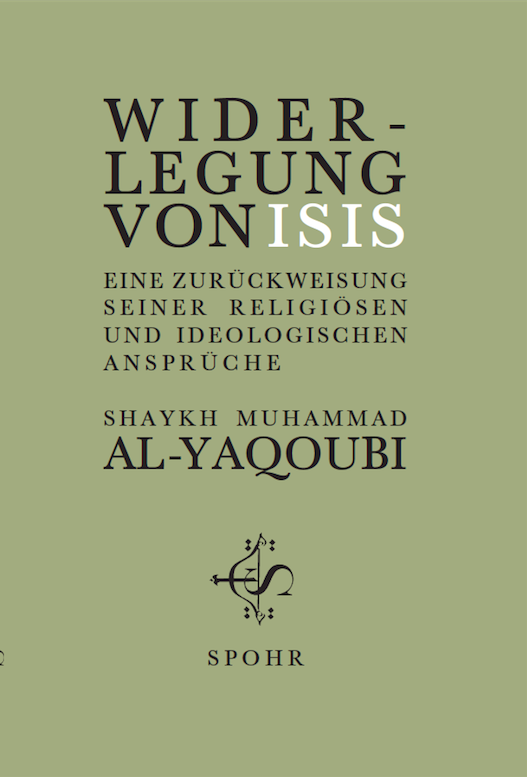
 Book | Yaqoubi: Refutuing ISIS – إنقاذ الأمة
Refutuing ISIS - إنقاذ الأمة
A Rebuttal Of Its Religious And Ideological FoundationsBy Shaykh Muhammad Al-Yaqoubi ⇒
إنقاذ الأمة للعلامة الشيخ محمد اليعقوبي
inqadh


Book | Yaqoubi: Sahaib al-Nada – سحائب الندى للشيخ محمد اليعقوبي
The Raining clouds - Sahaib al-Nada - سحائب الندى
A collection of poems with musical arrangementBy His Eminence Shaykh Muhammad al-Yaqoubi ⇒
سحائب الندى للشيخ محمدأبى الهدى اليعقوبي
Book | Yaqoubi: Shamail al-Habib al-Mustafa – شمائل الحبيب االمصطفى ﷺ للشيخ محمد اليعقوبي
Shama’il al-Habib al-Mustafa - شمائل الحبيب االمصطفى
The Prophet Muhammad ﷺ - His Beauty and PerfectionBy His Eminence Shaykh Muhammad al-Yaqoubi ⇒
شمائل الحبيب المصطفى للعلامة الشيخ محمد أبي الهدى اليعقوبي

Book | Yaqoubi: Shifa al-Qulub – شفاء القلوب للشيخ محمد اليعقوبي
Shifa al-Qulub - شفاء القلوب
Cure of the heartsBy Sayyid Shaykh Muhammad al-Yaqoubi ⇒
شفاء القلوب للسيد الشيخ محمد اليعقوبي
Shifa ul quloob quloub qulub
Book | Yaqoubi: Tariq al-Dua | طريق الدعاء
Prayer to Remove Calamities
Compiled by HIs Eminence Shaykh Muhammad al-Yaqoubi ⇒طريق الدعاء لكشف البلااء - جمعها الشيخ محمد أبو الهدى اليعقوبي
Book | Yaqoubi: Tashtir al-Burda – تشطير قصيدة البردة للشيخ محمد اليعقوبي
Tashtir al-Burda - تشطير قصيدة البردة
The Prophetic Lights – A Poetic Expansion of Imam al-Busiri's "Poem of the Mantle"By His Eminence Shaykh Muhammad al-Yaqoubi ⇒
الأنوار المحمدية تشطير الكواكب الدرية للعلامة الشيخ محمد اليعقوبي
Book | Yaqoubi: The Moroccan Revelations – الفتوحات المغربية للشيخ محمد أبي الهدى اليعقوبي
The Moroccan Revelations
The Prophetic Lights – A Poetic Expansion of Imam al-Busiri's "Poem of the Mantle"By His Eminence Shaykh Muhammad al-Yaqoubi ⇒
الفتوحات المغربية للعلامة الشيخ محمد أبو الهدى اليعقوبي



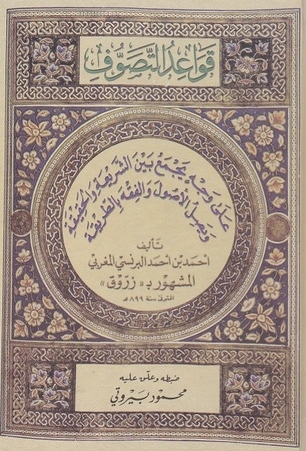
Book | Zarruq: Qawa’id al-Tasawwuf
Zarruq: Qawa'id al-Tasawwuf
The Principles of TasawwufBy Imam Ahmad Zarruq ⇒
الإمام أحمد زروق : قواعد التصوف
 Dar al-Beiruti, Damascus 2004
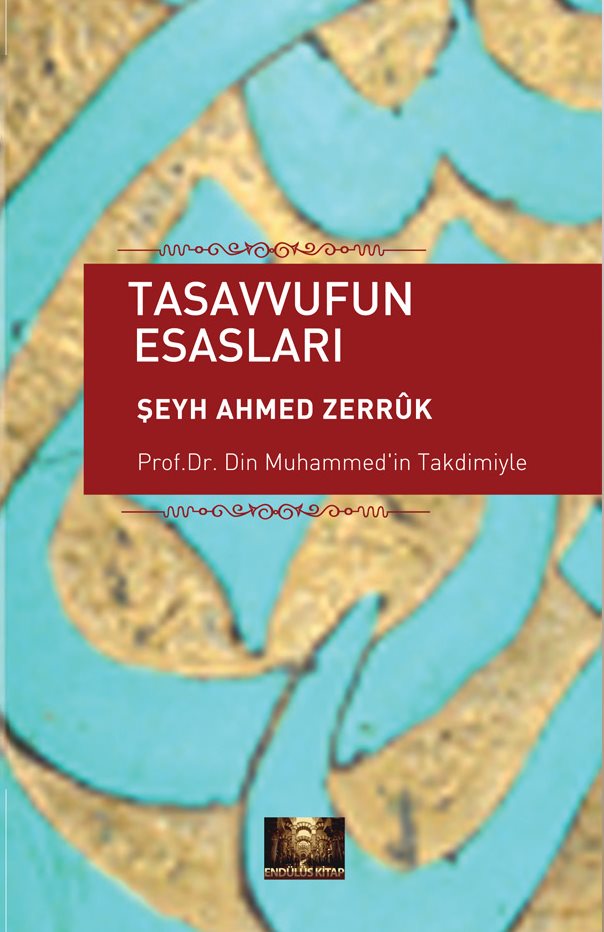
  Şeyh Ahmed Zerruk: Tasavvuf'un Esasları
  Transl. by Zainab Israbadi as "The Principles of Tassawwuf" - PDF
Book | Zarruq: Urjuza ‘Uyub al-nafs – أرجوزة في عيوب النفس ودوائها للعلامة أحمد زروق
Zarruq: 'Uyub al-nafs
Didactic poem on the Defects of the SoulsBy Sh. Ahmad Zarruq ⇒
أرجوزة في عيوب النفس ودوائها نظم العلامة أحمد زروق الفاسي
أرجوزة في عيوب النفس ودوائها نظم العلامة أحمد زروق الفاسيBooklet | Yaqoubi: Bab al-Jannah – باب الجنة للعلامة الشيخ محمد اليعقوبي
Bab al-Jannah - The Door to Paradise
Forty Ayat and forty hadiths about the virtues of invoking and of the inovokersCompiled by Sayyid Shaykh Muhammad al-Yaqoubi ⇒
باب الجنة للعلامة الشيخ محمد اليعقوبي
Shifa ul quloob quloub qulub



Books of Imam Al-Ghazali
From ghazali.org
كنب الإمام الغوالي
|
Books of Imam al-Sha’rani | كتب الأمام الشعراني
Writings of Imam al-Sha´rani
List of books bySh. Abul Mawahib Sharaf al-Din 'Abd al-Wahhab 'Ali al-Sha'rani ⇒
كتب الإمام أبو المواهب شرف الدين عبد الوهاب علي الشعراني
Books of Imam Al-Suyuti
Book list: Writings of Imam Al-Suyuti
اﻺمام الحافظ عبدالرحمن بن أبي بكر بن محمد جلال الدين السيوطي
Books of Sh. Ibn ´Ata Allah al-Sakandari
Book list: Writings of Sh. Ibn ´Ata Allah al-Sakandari
كتب لسيدي اللشيخ ابن عطاء السكندري
Cairo: ‘Amr ibn al-‘As – Mosque
Historical burial place of Sayyiduna 'Amr ibn al-'As in Cairo
(more…)
Cairo: Al-Husayn Mosque
Mosque of Sayyid Al-Husayn b 'Ali b. Abi Talib
radiya Allah 'anhum
(more…)
Cairo: Dhul Nun al-Misri et.al. – Mosque
radiya Allah 'anhum
(more…)
Cairo: Khanqa Sa’id al’Su’ada
also called الخانقاه الصلاحية and ودويرة الصوفية.
Possibly the burial place of Imam Taqi al-Din al-Subki (?)
When Saladin al-Ayyubi took control of Egypt, he gave this house to the Sufis arriving from remote countries in the year 569 H. (Ref). Amongst the scholars and sufis who visited the Khanqah was Sh. Muhyiddin Ibn al-'Arabi.
(more…)
Cairo: Sayyida Nafisa – Khalwa
Place of worship of Sayyida Nafisa near the maqam of Sh. Ibn Ata Allah
(more…)
Calligraphy: Layout of the Hilya
The Hilya, or the Adornment of the Prophet: A Calligraphic Icon
Commentary and Translation by Carl W. Ernst
The hilya or “adornment” is a calligraphic portrayal of the Prophet according to a traditional Arabic account of his physical appearance.Ý (more…)
Card 2. Light sticks
﷽
Story
Bottom lines
1 – Miracles of Rasul Allah (s) passed on to sahaba
2 – Metaphor light – guidance
3 – Together the lights join
Illustration
Card 3. Sh. Ibn Mashish met his Shaykh as a child
﷽
Story
From the tabaqat:
Sayyiduna Sh. Ibn Mashish was the Shaykh of Imam Abul Hasan al-Shadhili , and the Qutb of his time.
He took the spiritual sciences from `Abd al-Rahman ibn al-Husayn al-`Attar (“The perfumer”), a spice merchant from the city of Sabta, who was called “az-Zayyat” or “al-Madani” because he resided in the oil sellers’ quarter of Medina (where his tomb is still found). His first encounter with Sheikh `Abd al-Rahman al-`Attar took place when he was at the age of seven. He was in a state of jadhb (spriritual attraction) when the Sheikh came to him, dsiplaying the signs of the people of Allah, and said to him: “I am your Sheikh”. He fortold him of his rank, his spiritual states, and mentioned each of his maqams one by one. Then he said: “I am your intermediary (wâsita) in every state and maqam”.
Ibn Mashish was asked: Did your Shaykh come to you or did you come to him?
He repplied: It was both ways.
Bottom lines
1. A child can be a wali of great ranks, experiencing the jadhb (attraction in the presence of Allah)
2. The Shaykh and the murid are pre-destined for each other, Allah brings them together.
3. The Sh. guides the murid through all the stages til he reaches the presence of Allah
Illustration
– Something related to perfume, perfume / spice sellers
– Symbolical ladder of maqams where the Shaykh is guiding his disciple
More
Card 4. The peril of envying the Awlia
﷽
Story
From Adab al-Suhba:
Point 33: Be happy for your and don’t envy him when people follow him and get attached to him
It is a right one owes a brother to be happy when many people follow him and turn towards him to attach themselves to him; anyone who is not (happy about it) is suffering from the illness of envy (hasad).
(It is stated) in a hadith: «Envy consumes good deeds as a fire consumes wood.»
From the admonishments of my Master ´Ali Wafa (may Allah show him mercy): “Be careful not to envy anyone whom Allah has preferred over you, so that Allah may not transform you as He transformed Iblis from an angelic form to a satanic form because he envied Sayyidana Adam (peace be upon him).”
(It is narrated) in the episodes from the life of my Master Ahmad al-Badawi – may Allah give us the benefit of his blessings that the holder of the Iwan of Tanta named “The Moonfaced” was a great wali, but envy arose in him when my Master Ahmad al-Badawi came to Tanta, and people turned towards him and attached themselves to him, so his state was reversed and his fame vanished, and his position in Tanta today is where the dogs end up. The Friday speakers of Tanta came to his support and worked in his favor for some time. They built a great minaret at his zawiya. Then my Master ´Abd al-´Al (may Allah the Exalted show him mercy) came and kicked it with his foot, and from that time up to our time it has disappeared.
—
From the tabaqat:
Yaqut al-`Arshi was the one who interceded for Sheikh Shams al-Din ibn al-Lubban (who disavowed Sheikh Ahmad al-Badawi, so that all his good deeds and rank were nullfied). Sheikh Shams al-Din had sought intersession from all the awlia, but Sheikh Ahmad al-Badawi did not accept it from anyone. Yaqut al-`Arshi then travelled from Alexandria to Tanta, and asked Sheikh Ahmad al-Badawi to change his opinion about Sheikh Shams al-Din, so that his rank may be returned to him, and Sheikh Ahmad al-Badawi complied to his request. – Later, Sheikh Yaqut al-`Arshi gave his daughter in marriage to Shams al-Din ibn al-Lubban, who made it his will , when he died, to be buried under her feet, out of respect for her father Sheikh Yaqut al-Arshi.
He was called al-`Arshi, because his heart was constantly under the Throne of Allah – only his body was on the earth.
It has also been said that it is because he heard the adhan from the Angels carrying the Throne of Allah.
He interceded even for the animals. Once, when he was sitting in the circle of the fuqara, a dove came and sat on his shoulder, and said some secret words in his ear. … (see TOPIC 1)
—
Bottom lines
1 – Allah appointed ranks for the awlia
2 – the danger in evying them and thinking oneself better than them, nto acknowledging their ranks
3 – the compassion of Sayyiduna Yaqut al-Arshi, how , despite the fact that this man messed homself up, he did eveything to save him
Illustration
Card 5. Birds pay attention to the Prophet (s)
﷽
Story
Bottom lines
1 – Miracle of Rasul Allah (s) : Animals react to him
2 – How his (s) mere presence has an impact
3 – Adab: What we can learn from the birds
Illustration
Card 6. The last Journey of Imam Abul Hasan al-Shadhili
﷽
Story
It was the year 656 A.H./1258 C.E., the very year in which a few weeks earlier the Mongol ruler Hulugu Jenghiz Khan had sacked Baghdad.
The Master Abu al-Hasan ash-Shadhdhuli had made it his custom that every other year he would travel to Mecca for the Pilgrimage. This year, he made preparations to go on the Pilgrimage as usual.
This time he asked that a pickaxe, shovel, and a shroud should be included in their baggage.
And he said to his beloveds, “This year I shall perform the Pilgrimage of substitution (hajjat an-niyaba).
As was his custom he set out on the southern route, known as the spice route, overland to Damanhur, then via Qahira, up the Nile to ‘Idfu in Upper Egypt. From there he would cross the Red Sea to Jiddah, and finally make the two-day camel ride to Mecca.
At Damanhur, a young boy, who was a student of the Qur’an, begged his mother to let him go with the Shaykh and his party to make the Pilgrimage. His mother, who was a widow, earnestly requested the Shaykh for her son that he be allowed to travel with his party, to which he replied, “We will look after him as far as Humaythira.”
And so it happened. It was related that Abu al-Hasan, may Allah have mercy upon him, had said, “When I entered the land of Egypt and established my dwelling there, I prayed to Allah, the Most High, saying: Ya Rabb, have You caused me to dwell in the land of the Copts, to be buried amongst them, until my flesh becomes mingled with their flesh and my bones with theirs? A reply then came to me: No `Ali, you will be buried in a land which Allah has never oppressed.”
It is also recorded that in the year of his death Abu al-Hasan ash-Shadhdhuli was heard to say, “Once when I fell ill, I said: Allah, O Allah, when will the encounter with You take place? I was told: Ya `Ali, when you reach Humaythira, then the encounter will come.”
Soon after entering the desert of `Aydhab, both the young boy and the Shaykh fell ill, the boy dying the day before we reached the watering-place of Humaythira. The followers wanted to bury the youth where he had died, but the Shaykh said, “Carry him to Humaythira.” When we arrived at this resting-place we washed the boy, and the Shaykh prayed over him before we buried him.
That evening the Shaykh, who was also very sick, called his companions around him and spoke to us.
He counselled us to recite his Litany of the Sea (Hizb al-Bakhr) often, and he said, “Teach it to your children for the Greatest Name of Allah (al-ismu ‘l-`azam) is in it.”
Then he talked privately to Sidi Abu al-`Abbas al-Mursi, giving him his orders as his successor with his special blessing. He, may Allah have mercy upon him, said to his followers, “When I am dead, look to Abu al-`Abbas al-Mursi for he is the Caliph (Khalifa) to come after me. He will have an exalted station amongst you for he is one of the Doors (abwab) of Allah, Praised and Exalted is He.”
He said, may Allah have mercy upon him,
“I saw (ina a dream or vision) as if I were buried at the base of a mountain before a well containing a little salty water, which became more abundant and sweet.”
Later that evening (the evening of his passing) he called for a jar of water to be filled from the well of Humaythira. When he was told, “Ya Sidi, its water is salty and bitter, but the water we have is fresh and sweet,” he replied, “Give me some of it for my intention is not what you think.” When we brought him the well-water he drank a little of it, rinsed his mouth with it and spat into the jar. Then he said, “Pour the water into the well.
“Immediately the well-water turned sweet and fresh to taste, and it was abundant enough to refresh all the travellers who stopped to replenish themselves at this place. His followers said, “The Shaykh passed the night in holy preparation and discourse with his Beloved God, continually mentioning His Name until the dawn came when he was still.”
Bottom lines
1. He went to hajj every two years
2. He knew he was going to die – enumerate all the different signs that he knew !
3. Last advice: Enjoining Hizb al-Bahr, “teach it to yoru children”
4. Appointing his khalifa
5. The miracle of the well
Illustration
– Utensils for burial
– Map of the Hajj route with stations
– The well
Card 7. Childhood and career of Sh. Ahmad Zarruq
﷽
Story
From the tabaqat:
His maternal grandmother took care of his upbringing. She was one of Allah’s Friends and a woman of righteousness and purity. When he reached four years of age, she had had him memorize the Qur’an. She thus brought him up through precept and the inculcation of perfection, until he grew up fond of worship and consistently recitating litanies.
At this point, he commenced seeking knowledge of the outward sciences, the pursuit of which occupied him until people pointed to him as an authority. He came to then teach these sciences, engage in circles of learning to admonish people, and deliver lessons. As a result, he became famous and scholars were drawn to him, basking in his pesence, and taking from his sciences and gnoses. After all this, Sufism became endeared to him, and he joined the path of the Sufis at the hand of the guide in spiritual wayfaring,
—
From unknown source:
On a beautiful Fajr morning on the 22nd of Muharram in the year 846 A.H (June 7th 1442 CE), in the village of Tiliwaan, was born a man the ‘Aarifeen would forever praise and look to for spiritual growth. His name was Ahmad ibn Ahmad ibn Muhammad ibn ‘Isaa Al Barnoosi Al-Faasi, known as Az-Zarruq. His parents died while he was one week of age due to a horrible outbreak known as ‘Azzunah. His maternal grandmother Umm Al-Baneen, a woman he would always express absolute love and gratitude for, raised him. Umm Al-Baneen had memorized the Qur’aan and studied Islaam. She was a Zaahida and raised her beloved grandson as one as well. Imaam Az-Zarruq describes his grandmother as such,
“She instructed me how to make Salaah and ordered me to do so at the age of five. At the same age she sent me to the kuttaab (Qur’anic School) and started teaching me about tawheed, tawakkul, eemaan, and deen in a curious method. One day she prepared food for me. When I came back from the Kuttaab for luch she said, ‘I have got nothing for you to eat. However, provision is in the treasure of the Almighty! Sit down and let us ask from Him!’ We stretched out our hands to the heavens and began praying to Allah . Then she said: ‘Go and look, aybe Allah has put something in the corner of the house.’ We began to search and how glad I was when I found the food! She said: ‘Come and let us thank Allah before we eat, so that our Lord may give us more from his Mercy!’ We thanked Allah and praised Him for an hour then we commenced eating. She used to do many times till I grew up.”
“Encouraging me to make Salah, she used to put a dirham on my pillow so that I might see it when I opened my eyes in the morning. She would say, ‘Make fajr then take the dirham.’ Her idea was that the dirham would gelp me to pray and keep me away from corruption and prevent me from looking at what is in other people’s hands when I desire to buy something.”
He continues to write, “After I had learned some chapters of the Qur’aan she began teaching me how to write and read. She would warn me against poetry saying, ‘He who neglects science and deals with poetry is like he who exchanges wheat for barley.’
His family were diligent in their remembrance of Allah as well as studies. When he was a child he sat in the market listening to some story-tellers when his uncle told him, ‘No one sits here save the idle!’ Shaykh Ahmad stated that he never listened to the story-tellers again. His grandmother sent him to be an apprentice of a cobbler. Later, however, at the age of sixteen Imaam Zarruq went to the epicenters of Islamic sciences in the west, the Qarawiyyeen University and the ‘Inaaniyyah college. There he studied Maaliki Fiqh, Hadith, Usool, and Arabic grammar. He had over 35 well known established scholars he sat under in these institutes. Some of them include Imaam Abdur-Rahmaan Ath-Tha’labi (died in 873 AH), Muhammad ibn Husain (As-Siraaj As-Saghir died 887 AH), Muhammad ibn ‘Ali Al-Bisti Al-Qalsaadi, and Abdur-Rahmaan Al-Qawri.
—
From Tabaqat
When Egyptian scholars and pious men heard about his arrival, they paid visits to him in delegations, kept his company and attended his lessons. He took up a lecturing post at the noble institute of al-Azhar, his classes there being attended by approximately six thousand people from Cairo and the surrounding areas of Egypt.
He performed the functions of imam of the Malikiyya, becoming the main teacher of the portico allocated to their school in al-Azhar. They set up a tall chair for him, resting on firm pillars and with a strikingly original and well-constructed shape. He would seat on it, deliver his lectures and enrich the attendees by his knowledge. Both free men and slaves benefited from his presence. This chair still exists until the present time by the portico of the Moroccan masters in the noble institute of al-Azhar.
He exercised tremendous influence and authority over the Emirs of Egypt, while all Egyptians, the elite and commonality alike, accepted him.
Bottom lines
1. Importance of (grand)mothers in the early formation of a child
2. Importance of learning Quran and practicing Awrad from young age
Illustration
– Child reading with Quran / Suhba
– Sh. on the minbar in Al-Azhar in front of a huge crowd
Card 8. Sh. Ahmad Zarruq’s first Shaykh, and his resque by Sh. Abul ´Abbas al-Hadrami
﷽
Story
From the tabaqat:
Sufism became endeared to Sayyiduna sh. Ahmad Zarrq, and he joined the path of the Sufis at the hand of the guide in spiritual wayfaring, our master ‘Abdullah al-Makki. From him he took the spiritual way, serving him continuously for some time.
While in his service, it so happened that one day when visiting his guide [‘Abdullah al-Makki] during the latter’s solitary retreat, he beheld two women of beautiful form in his guide’s company, one on his right and the other on his left. The wide appeared to turn now to this one and then to that one.
Upon seeing this, our master Zarruq whispered to himself: ‘This man is a heretic’, whereupon the teacher retorted: `Go away, you jew!’
Sidi Ahmad Zarruq thus went away, and it was as if his teacher had cast the descriptive attribute of a jew upon him. He wept on account of this, and beseeched Allah Most High, setting out for one of his beloved companions and requesting that he go to the teacher and seek to win his favour. His dear friend accompanied him to the teacher and tried to attract his sympathetic compassion back towards Zarruq. Al-Makki pardoned and accepted him, saying: ‘On condition you do not sit with us in a country where I happen to be in.’ Thereafter, al-Makki turned to him and said: ‘O Zarruq, the two women who appeared to be ambiguously unclear to you, and who resembled one another in your perception, are this world and the Next. This world desires my advancement towards it, and the Hereafter requires from me that I should approach it, but I do not turn attentively to the utterance of either of them.’
After this incident, our master Zarruq left the city of Fez and set out for Cairo, where he met up with our liege and master, Abu’l-‘Abbas al-Hadrami.
—
Sh. Zarrq met with our master Abu’l-‘Abbas al-Hadrami when he came to Cairo. He informed the latter of what had occured to him in the company pf ‘Abdullah al-Makki. Our master Abu’l-‘Abbas said to him: ‘What you received from him was fine; there is no harm in that.’ He then took Sidi Ahmad Zarruq with him to Cairo, instructed him in knowledge of Sufi covenants and litanies, and entered him into the solitary retreat [khalwa].
Sidi Ahmad Zarruq remained therein for a number of days until our master Abu’l-‘Abbas, while sitting in a circle of instruction with his disciples, stretched our his hand and screamed. He then instructed his students, saying, ‘Go to your Moroccan brother, since the blind serpent has caused the solitary retreat to crush down on him.’ (He said this is a reference to ‘Abdullah al-Makki, who was a blind man.)
His students hastened to the place our master Zarruq’s retreat, and found the debris [of the building] upon him. They took him out safely from under the building, with nothing harmful befalling him by the permission of Allah Most High.
The hand of our master Abu’l-‘Abbas, however, broke in the process. He said to Zarruq, ‘Allah rescued you from this blind bane, and he no longer has any authority ober you.’ Our master ‘Abdullah al-Makki had in fact stretched out his hand to dispose of our master Ahamad Zarruq from the city of Fez, out of his jealous attachment [ghayra] to him, and consequently wrecked the solitary retreat for him. Allah, however, delivered him through the blessing of our liege Abu’l-‘Abbas, and guarded him from his former guide.
Bottom lines
1.
2.
Illustration
–
Course: Arabic | Balagha Wadiha – البلاغة الواضحة
﷽
Teacher: Ustadha Umm Ayman
Teaching Language: English
Timing: t.b.d.
Text
Text
Audio
Course: Arabic | Nahw – Qatr al-Nida – قطر الندى
﷽
Teacher: Sh. Umm Ayman
Teaching Language: English/Arabic
[is logout]
Course: Arabic | Nahw Level 1 – Basic Course in I’rab
Nahw Level 1
Basic course in i’rab – Gerede Summer 2018
﷽
Teaching Language: English w/ summaries in Turkish
Pre-requisites: Ability to read Arabic, some basic vocabulary
Aim: To understand basic concepts of Arabic syntax (i’rab)
(more…)